The New Normal: The Life of an Essential Worker

As months go by, essential workers amid the Coronavirus pandemic risk their health and wellbeing to make a living. COVID-19 is still a constant threat to many people. The months following were grim as thousands quarantined in their homes.

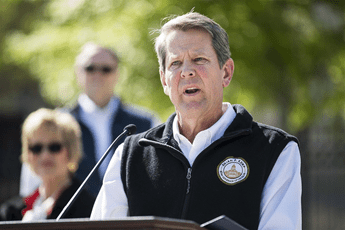
Since then, countless people’s lives were put on hold. The last few months have been stressful for everyone, while state officials gave out safety measures. Georgia Governor Brian Kemp declared a state of emergency and a stay-at-home order in March and April. After the stay-at-home order was lifted, the months that followed did not go as planned. Georgia had one of the highest confirmed COVID cases in the United States.

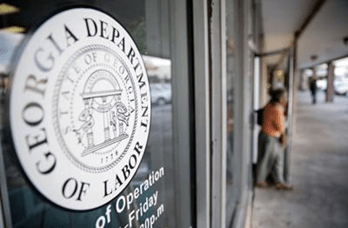
Individuals around the world struggled to make ends meet at home and in the workplace. Most workers dealt with the looming fear of losing their jobs or getting sick. Some families were able to live off unemployment benefits and a stimulus check issued by the Government. According to Ross Williams, “The department distributed at least $309 million to out-of-work Georgians in 2020 at last count, more than it paid out in all of 2018 or 2019.”
However, that was not the case for all Georgians. Austin McDougle is one out of thousands who are considered an essential worker. As a Senior in college, unemployment is not an option for him.

“At the beginning of Covid-19, I had just become out of work and needed to find a new job,” Austin says. “I did not understand that the Government was expanding unemployment to more people, so instead, I got another job as a delivery driver.”

Austin balances work and school to make ends meet at home. Covid-19 has made the lives of many young working adults much more challenging. The public is continuously adjusting to changes in the workplace and at home. Nonetheless, the new safety precautions offer essential workers a clean and safe work environment.

Mr. McDougle discussed how his workplace requires that all employees wear a mask. Before every shift, he also must get temperature checks and sanitize the store frequently.
 “My main challenge has been being able to social distance while communicating and exchanging things with people,” he says. “It can be especially difficult as an employee because you feel more vulnerable to COVID than others.”

Living through a pandemic has not been easy for anyone. As a nation, everyone is dealing with personal struggles within their community. Many people have changed their daily schedules to accommodate others.

“The Coronavirus has made me reconsider the things I used to do and made staying at home more worthwhile,” Austin says.

During these dark times, there are so many others who are in identical situations as Austin. Countless communities throughout America depend on their jobs to survive. The Unemployment rate skyrocketing has been the leading cause of displaced women and men. In April, Georgia’s unemployment rate ranked fourth in the nation at 13.6 percent.

The other half of employed Georgians are still suffering repercussions. Adults underwent a rude awakening working from home. Parents were forced to adapt to their new workplace in their homes quickly.

Pamela Starks has been a court reporter for more than 25 years. She is always dealing with the public on a day-to-day basis. Times have changed in the last few months as she adjusts to her new workplace at home.

 “My biggest challenge while working from home is functioning with all the equipment necessary to accomplish my job tasks,” she says. “I have had to go into the office on several occasions in order to make that happen.”

Going into work is still a safety concern for everyone, including Ms. Starks. Businesses struggle to remain open as their workers become sick and are forced to stay home.

“The leadership has not been strong in the areas of organization and expectations during COVID,” she says.  

Pamela and her coworkers are lucky ones who were offered to work from home until further notice. She took this opportunity as a blessing instead of a burden. Most of her paperwork is accessible from her home computer.

“I have been more relaxed schedule-wise and starting later, so that has been an adjustment but an easy one,” she says.

Recovering from the Coronavirus pandemic will be rocky for Georgians. Whether they work from home or in a business, the public is eager for things to return to normal. Everyone must be mindful of the precautions given by Public Health officials. Communities will need to work together. Although the last few months have been bleak, it is essential to help one another to make a difference.

5 Facts About Reproductive Healthcare in Atlanta

Every person is entitled to reproductive freedoms. Abortion access is available to the public to grant everyone equal access to safe and affordable reproductive care in Georgia.  

1. Since 2017, there are over 26 facilities that provide abortion access in Georgia. Fifteen of those are clinics. 

2. Planned parenthood provides many forms of affordable healthcare. Through telehealth, patients can get care from experts anytime.

3. Almost all types of emergency contraception are available at a pharmacy. Any person has access to this, regardless of age, and without a prescription.

4. Access Reproductive Care Southeast provides financial and logistical support to navigate safe, compassionate, and affordable reproductive healthcare. The clinic offers building power and support through advocacy, education, and leadership development.

5. Feminist Women’s Health Center is a non-profit organization located in Georgia that provides safe and compassionate reproductive health services. The local-based organization offers a range of services including, trans health initiative, abortion care, and sexual health and wellness.

Georgia residents have freedom and dignity to access reproductive resources and care regardless of policing and violence.

5 Ways to Stay Motivated During Quarantine

During these times, it may seem easy to get run out of things to do in the first week of quarantine. However, there are so many new things to try out at home.

  1. Set boundaries. Set daily goals to complete throughout the day. Use a planner or list to keep track.
  2. Yoga and meditation are valuable for the body and soul. There are endless yoga and meditation videos on the internet available to watch.
  3. Read a book and finish it! Now is the perfect time to open and start a new book. If not now, then when?
  4. Get some fresh air. Going for a walk outside is a great way to freshen the body and mind.
  5. Start streaming a TV series or movie. Netflix and Hulu offer many binge-worthy shows and movies.

People find themselves twiddling their thumbs instead of finding a new hobby. There are endless activities available at everyone’s fingertips.

COVID-19: Live Updates, GA Executive Order and Helpful Tips

As the Coronavirus pandemic comes and goes, everyone must do their part. To beat COVID-19, we all must stop the spread of the virus. Safety measures such as washing your hands, social distancing, and wearing a mask make a huge difference. Following the precautions given by Public Health officials will help save lives. It is essential to be mindful of the cautions taken during this time.

Everyone should follow the rules and restrictions given by the Government. The more time spent practicing precautions, the sooner things will go back to normal.

Georgia State alumni push for change through nonprofit organization

Jaira Burke has always been known for her fierce and hard-working spirit throughout high school and college. Little did she know that her willful intuition would lead her to a future full of campaigning for others. 

Now, as a Georgia State alumnus, Jaira has found her calling within the non-profit organization, Amplify GA. This non-profit organization strives towards the protection and expansion of abortion access in Georgia cities. As the campaign manager, Jaira asserts her passion and a strong belief in justice and non-profit advocacy work.

“When Alabama passed the House Bill 314, a near-total ban on abortion with no exception for rape or incest, we sent a plane over to fly our “Abortion is Ok!” banner over Alabama State Capitol,” Jaira says. 

Selfie with Jaira

Ms. Burke is one of the thousands of women in Georgia who fights for reproductive healthcare rights. After months of advocacy and organizing, the Atlanta City Council passed a resolution establishing the first-ever Reproductive Justice Commission (RJC). 

The Reproductive Justice Commission’s goal is to convene community members, advocates, and local decision-makers to come up with innovative ideas and solutions to protect and expand access to abortion and other reproductive healthcare. Jaira is one of the members who helped lead efforts to get the RJC passed and helped draft the resolution. 

“We envision the commission to be transparent, accountable, and reflective of the Atlanta community,” Jaira says. “We are currently in the process of identifying the finest experts and advocates to sit on the RJC, which will be launched this year.”

Jaira Burke via Instagram @Ariaj.xo

RJC also aims to improve health outcomes “related to reproductive, maternal and infant health, and abortion access in Atlanta,” according to Casey Quinlan of Rewire News.

 Reproductive justice activists believe that restrictions on abortion and other healthcare needs in Georgia are responsible for the rising rates of maternal deaths for black women. States that have more restrictions on abortion contribute to poor health outcomes, and racism assists in this problem as well, according to the Center of American Progress

“Georgia has a high maternal mortality rate, and that disproportionately affects women and trans and nonbinary people of color in the state, so any time you implement something that is going to restrict health care it is going to impact the groups already affected,” says Kenyetta Chinwe, project coordinator of SisterSong

Amplify GA and other similar organizations experience setbacks in the process of fighting for reproductive rights. One of Jaira’s close friends and coworkers, Lara Tine, has been fighting for reproductive freedoms alongside many other people.

Via Instagram @Ariaj.xo

“We are constantly challenging misinformation and stigma on our work,” Lara says. “That is why education and promoting the sharing of scientifically accurate information is critical to our work.”

Ms. Burke is regularly working with Amplify GA and other similar organizations for more access to reproductive healthcare in Georgia cities. The organization plans on establishing a Reproductive Justice Commission in Clarkston, Georgia. Therefore, they can inform the capital of the advocacy work they are doing on. 

Last December, Amplify GA teamed up with NAPAWF to host discussions with Clarkston stakeholders about the reproductive health barriers unique to their community. 

“Everyone sat back and listened as the stakeholders shed light on obstacles such as misinformation and stigma,” Jaira says. “As well as the need for greater cultural competency among healthcare professionals and service providers in Clarkston.”

Jaira and I

This year, Amplify intends to continue these conversations through listening sessions. They plan on partnering up with local community leaders to develop the best strategy to advance reproductive health, rights, and justice in Clarkston.

“Amplify GA has major upcoming events this year,” Ms. Burke says. “We are currently launching our listening sessions to engage Clarkston’s unique immigrant and refugee communities and surface their local reproductive health needs.”

Selfie-standup video regarding upcoming interview with Jaira Burke and Amplify GA!